Cloud Infrastructure
Compare the best cloud infrastructure tools. Read reviews, compare features and pricing.
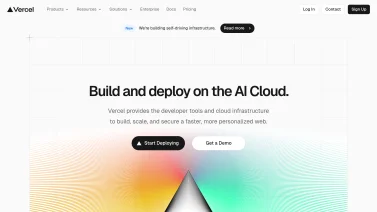

Vercel
Deploy instantly
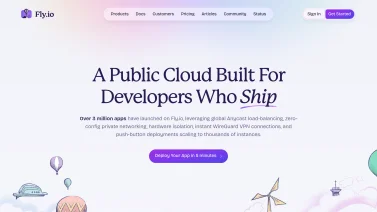

Fly.io
Deploy app servers
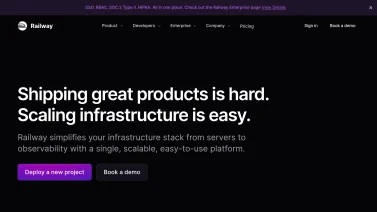

Railway
Deploy anything
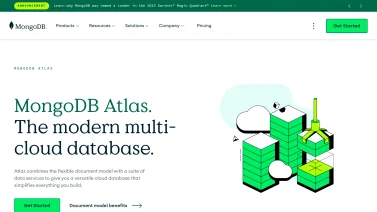

MongoDB Atlas
Cloud database

Render
Cloud hosting


Neon
Serverless Postgres

CapRover
Free and open source PaaS
Cloud Infrastructure Powers Modern Application Deployment and Scalability
Cloud infrastructure has evolved from early hosting services into comprehensive platforms that manage compute, storage, networking, and databases at scale. Modern cloud infrastructure consolidates virtualization, container orchestration, serverless computing, managed services, and analytics into unified environments that enable organizations to deploy and scale applications efficiently. The transformation from on-premise data centers to cloud-native architectures reflects organizational recognition that infrastructure flexibility and operational efficiency directly influence application performance, development velocity, and business agility.
Cloud infrastructure software extends far beyond simple hosting to become strategic business foundation that influences how organizations develop, deploy, and operate applications. By enabling rapid deployment, automatic scaling, reduced operational overhead, and global reach, modern cloud platforms enable organizations to focus on business logic rather than infrastructure management. Organizations implementing sophisticated cloud strategies report faster time-to-market, reduced operational costs, improved application performance, and enhanced business flexibility.
Core Cloud Infrastructure Capabilities
Modern cloud infrastructure platforms deliver a cohesive suite of capabilities that enable organizations to scale resources, protect data, and maintain performance across distributed environments. By integrating compute, storage, networking, database, security, monitoring, and automation features, these solutions provide the flexibility and control required for dynamic workloads and rapid innovation.
Compute Services and Virtual Machines
Flexible compute options accommodate diverse application requirements. Virtual machines provide traditional server replacement. Container services enable lightweight deployment. Serverless functions eliminate server management. Bare metal options provide maximum performance. Auto-scaling automatically adjusts capacity based on demand. Load balancing distributes traffic. These compute capabilities enable flexible application deployment.
Storage Solutions and Data Management
Multiple storage options optimize for different workloads. Object storage handles unstructured data at massive scale. Block storage provides high-performance databases and applications. File storage enables shared file systems. Archive storage minimizes long-term retention costs. Geographic replication ensures data availability. Encryption protects sensitive data. These storage capabilities enable reliable data management.
Networking and Content Delivery
Global networking infrastructure enables worldwide applications. Content delivery networks accelerate global access. Virtual networks isolate resources securely. VPN and private connections ensure secure connectivity. Load balancers distribute traffic efficiently. DDoS protection defends against attacks. DNS services enable reliable name resolution. These networking capabilities enable global application delivery.
Database Services and Data Processing
Managed database services reduce operational burden. Relational databases enable structured data. NoSQL databases enable flexible schemas. Data warehouse services enable analytics. Stream processing enables real-time insights. Data pipeline services orchestrate complex workflows. These database capabilities enable effective data management.
Security and Access Management
Comprehensive security controls protect infrastructure. Identity and access management controls permissions. Encryption protects data in transit and at rest. Firewall services protect from attacks. Compliance tools ensure regulatory requirements. Audit logging tracks all activities. Secret management protects credentials. These security capabilities protect infrastructure and data.
Monitoring and Operational Tools
Comprehensive monitoring provides infrastructure visibility. Application performance monitoring tracks user experience. Infrastructure monitoring tracks resource utilization. Log management enables troubleshooting. Alert systems notify of problems. Analytics identify optimization opportunities. Cost analysis tracks spending. These operational tools enable efficient management.
Infrastructure as Code and Automation
Infrastructure automation streamlines deployment. Infrastructure as code enables version control. Configuration management ensures consistency. Deployment automation accelerates releases. Infrastructure templates enable rapid provisioning. CI/CD pipelines enable continuous delivery. Orchestration tools manage complex deployments. These automation capabilities improve efficiency.
Key Benefits of Cloud Infrastructure
Adopting cloud infrastructure transforms how organizations deliver services, providing a foundation that accelerates innovation while simplifying management. By leveraging virtualized resources, companies can respond to demand spikes, lower capital expenditures, and maintain consistent performance across regions. This flexibility also enhances security controls and ensures higher availability for critical applications.
Rapid Deployment and Time-to-Market
Cloud infrastructure accelerates application deployment. Pre-built services reduce development time. Infrastructure provisioning takes minutes not weeks. Container deployment enables fast iterations. These rapid deployment capabilities accelerate business impact.
Automatic Scaling and Flexibility
Elastic scaling adapts to demand automatically. Sudden traffic spikes handled transparently. Cost scales with utilization. Global expansion requires minimal infrastructure changes. These scaling capabilities ensure consistent performance.
Reduced Operational Costs
Cloud eliminates capital expenditure on equipment. Managed services reduce operational staffing. Automatic updates reduce maintenance burden. Pay-per-use eliminates over-provisioning. Global scale reduces per-unit costs. These cost reductions improve profitability.
Improved Reliability and Availability
Distributed infrastructure enables geographic redundancy. Automatic failover ensures availability. Data replication prevents data loss. Built-in backups ensure data protection. Disaster recovery capabilities ensure business continuity. These reliability capabilities minimize downtime.
Global Reach and Performance
Global infrastructure enables worldwide deployment. Content delivery networks accelerate global access. Regional data centers enable compliance. Edge computing reduces latency. These global capabilities enable worldwide applications.
Enhanced Security and Compliance
Enterprise-grade security protects applications. Compliance certifications meet regulatory requirements. Encryption protects sensitive data. Audit capabilities demonstrate compliance. These security capabilities protect organizations.
Cloud Infrastructure Deployment Models
Understanding how cloud resources are organized is essential for selecting the right deployment model, as each approach balances control, scalability, and integration differently. This section explores the spectrum of options, from shared public environments to isolated private setups, and examines how hybrid and multicloud strategies enable flexible, resilient architectures tailored to diverse business needs.
Public Cloud Platforms
Public clouds provide shared infrastructure at scale. AWS dominates market with comprehensive services. Azure emphasizes enterprise and hybrid integration. Google Cloud excels in analytics and machine learning. These platforms provide maximum flexibility and scalability.
Hybrid Cloud Solutions
Hybrid clouds integrate cloud and on-premise infrastructure. Organizations maintain sensitive workloads on-premise. Development and testing leverage cloud agility. Disaster recovery leverages cloud redundancy. These approaches balance control and agility.
Private Cloud Infrastructure
Private clouds provide dedicated infrastructure. Organizations maintain complete control. Sensitive workloads remain internal. Compliance requirements are met directly. These approaches maximize security and control.
Multicloud and Distributed Infrastructure
Multicloud strategies reduce vendor lock-in. Workloads distributed across providers. Disaster recovery leverages multiple providers. Cost optimization leverages provider strengths. These strategies maximize flexibility.
Current Trends in Cloud Infrastructure
The cloud infrastructure landscape is evolving rapidly, driven by demands for greater agility, scalability, and cost efficiency. Organizations are shifting toward models that abstract underlying hardware, enabling developers to focus on code and outcomes. This momentum fuels innovations across compute paradigms, orchestration tools, distributed resources, and integrated intelligence services.
Serverless and Function-Based Computing
Serverless computing eliminates infrastructure management. Pay only for code execution time. Automatic scaling handles load variations. Developers focus on code rather than infrastructure. Serverless adoption continues accelerating.
Container and Kubernetes Adoption
Containerization enables portable applications. Kubernetes orchestrates container clusters. Multi-cloud Kubernetes enables vendor flexibility. Container adoption continues accelerating.
Edge Computing and Distributed Processing
Edge computing brings computation closer to users. Reduced latency improves user experience. Processing moves from centralized to distributed. Edge computing adoption continues growing.
AI and Machine Learning Services
Cloud platforms provide AI and machine learning services. Pre-trained models accelerate development. AutoML enables automatic model generation. These AI services democratize machine learning.
Selecting Appropriate Cloud Infrastructure
Choosing the right cloud infrastructure sets the foundation for performance, scalability, and long-term agility. This section guides decision-makers through the critical factors that influence platform selection, from matching technical needs to budget constraints and ensuring future flexibility. Understanding these dimensions helps avoid costly missteps and supports sustainable growth.
Assessing Infrastructure Requirements
Cloud selection requires understanding needs. Evaluate workload type, performance requirements, and compliance needs. Startup businesses may prefer public cloud. Enterprise organizations may prefer hybrid. Government organizations may prefer private. Different needs benefit from different approaches.
Considering Cost and Financial Models
Evaluate cloud pricing models carefully. Pay-per-use scales costs with utilization. Reserved instances reduce predictable costs. Spot pricing reduces compute costs. Different pricing models benefit different workloads.
Assessing Vendor Lock-In and Portability
Consider strategies to reduce vendor lock-in. Containerization enables portability. Standards-based approaches reduce lock-in. Multicloud strategies distribute risk. These considerations ensure flexibility.
The Future of Cloud Infrastructure
Cloud infrastructure will continue evolving toward greater automation, intelligence, and distribution. Artificial intelligence will increasingly optimize infrastructure. Edge computing will continue growing. Serverless will continue accelerating. Cost optimization tools will become standard. Organizations prioritizing cloud innovation position themselves for sustained competitive advantage.
Modern cloud infrastructure represents essential business foundation that directly impacts application performance, deployment velocity, and operational efficiency. By enabling rapid deployment, automatic scaling, reduced overhead, and global reach, cloud platforms enable organizations to focus on business innovation. Organizations implementing sophisticated cloud strategies gain significant competitive advantages through faster time-to-market, improved reliability, reduced costs, and enhanced business flexibility.
Frequently Asked Questions
Cloud infrastructure software provides the virtual resources that replace or supplement on-premise servers, storage, networking and security. It lets a business provision compute power, data storage and network capacity on demand, scaling up or down as workloads change. The platform handles underlying hardware management, updates and fault tolerance, so IT staff can focus on applications instead of physical equipment. It also supports remote access, integrates with development tools and can improve agility, cost control and resilience.
Key capabilities include scalability, which lets resources expand or contract with demand, and reliability, measured by uptime and failover mechanisms. Automation features such as provisioning, orchestration, and configuration management reduce manual effort and errors. Security controls like network isolation, encryption, and identity management protect data and workloads. Integration with existing tools and APIs enables seamless workflows, while cost visibility and usage reporting help optimize spending.
Cloud infrastructure software sits as a flexible foundation that connects to on-premise servers, databases, and SaaS applications through APIs and networking bridges. It can extend current workloads to virtual machines or containers while preserving data pipelines and security policies. By providing unified management, it allows legacy tools to communicate with scalable resources, enabling gradual migration or hybrid setups without disrupting daily operations.
Teams often underestimate the complexity of migrating existing workloads and overestimate how quickly staff can adapt to new operational models. Skills gaps appear when engineers lack experience with automation APIs or infrastructure as code practices. Cost overruns follow from idle resources or misconfigured scaling policies. Governance breaks down when access controls and tagging standards are deferred. Successful adopters invest in training before migration, enforce policy as code from day one, and run controlled pilots that validate both technical patterns and organizational readiness.