Email Marketing
Compare the best email marketing tools. Read reviews, compare features and pricing.

ConvertKit
Email for creators


ActiveCampaign
Email marketing automation


Omnisend
E-commerce email & SMS
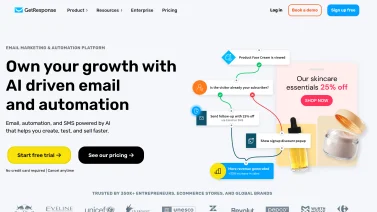

GetResponse
Email marketing
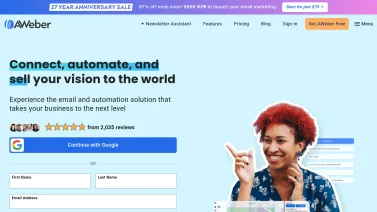

AWeber
Email marketing
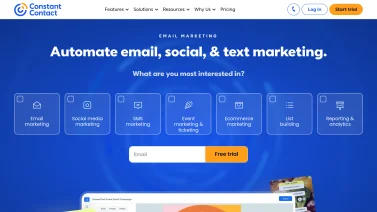

Constant Contact
Email marketing
Email Marketing Drives Customer Engagement and Revenue
Email marketing has evolved from simple mass distribution tools into sophisticated platforms that enable organizations to build lasting customer relationships through personalized, behavior-triggered communications. Modern email marketing software consolidates campaign creation, audience segmentation, automation workflows, analytics, and deliverability management into integrated environments that enable marketers to execute complex, multi-step campaigns automatically. The shift from basic email sending to intelligence-driven personalization reflects organizational recognition that email remains one of the highest-return marketing channels and that relevance directly drives customer engagement and revenue.
Email marketing extends far beyond sending messages to become a strategic tool that influences how organizations acquire customers, nurture relationships, and drive revenue. By automating communications based on customer behavior, personalizing messages to individual preferences, and continuously optimizing based on performance data, modern email platforms enable marketers to deliver the right message to the right person at the right time. Organizations implementing sophisticated email marketing strategies report average returns of $42 for every dollar spent on email marketing, making email one of the most cost-effective marketing channels available.
Core Email Marketing Capabilities
A robust email marketing platform equips users with tools that streamline campaign creation, target the right audiences, and measure results effectively. It enables intuitive design of responsive messages, sophisticated segmentation, automated workflow orchestration, dynamic personalization, detailed reporting, clean list upkeep, and seamless integration with other marketing channels, all within a unified interface.
Email Template Design and Drag-and-Drop Builders
Modern email editors enable creating professional emails without coding skills. Drag-and-drop editors enable visually building emails by selecting and arranging components. Pre-built templates accelerate campaign creation by providing starting points for common email types. Responsive design ensures emails display properly across devices and email clients. Brand customization enables incorporating logos, colors, and fonts matching brand identity. Dynamic content blocks enable showing different content to different subscribers based on their characteristics. Accessibility features ensure emails are readable by assistive technologies. These design capabilities enable marketers to create professional emails quickly without requiring design expertise.
Advanced Audience Segmentation
Audience segmentation enables dividing subscribers into groups for targeted messaging. Demographic segmentation divides subscribers by characteristics including age, location, company size, and job title. Behavioral segmentation divides subscribers based on actions including email opens, clicks, purchases, and browsing history. Purchase history segmentation enables tailoring messages based on previous purchases and spending levels. Engagement-based segmentation enables identifying active, inactive, and at-risk subscribers. Dynamic segmentation automatically updates segments as subscriber behavior changes. Predictive segmentation uses machine learning to identify subscriber characteristics likely to convert. These segmentation capabilities enable highly targeted campaigns that resonate with specific subscriber groups.
Marketing Automation Workflows
Automation enables sending emails triggered by specific actions or conditions without manual intervention. Welcome sequences automatically send series of messages to new subscribers. Abandoned cart recovery automatically reminds customers of items left in shopping carts. Post-purchase follow-up automatically requests reviews and recommends complementary products. Re-engagement campaigns automatically target inactive subscribers. Lifecycle-based automation sends messages appropriate to subscriber stage including onboarding, engagement, and win-back. Conditional logic enables branching workflows where subsequent messages depend on prior actions. These automation capabilities dramatically reduce manual work while ensuring timely, relevant communications.
Personalization and Dynamic Content
Personalization enables customizing messages to individual subscribers rather than sending identical messages to everyone. Merge fields enable inserting subscriber names and other personal information into emails. Behavioral content dynamically changes email content based on subscriber actions including past purchases and browsing history. Predictive content uses machine learning to recommend products and content likely to interest individual subscribers. Subject line personalization including subscriber names increases open rates. Send time optimization determines the best time to send emails to individual subscribers. These personalization capabilities dramatically improve engagement and conversion rates by making emails more relevant.
Comprehensive Analytics and Reporting
Detailed analytics provide visibility into email performance across multiple dimensions. Open rates reveal what percentage of recipients opened emails. Click-through rates measure engagement by tracking which links recipients clicked. Conversion tracking connects email activities to business outcomes including purchases and sign-ups. Unsubscribe and complaint tracking reveals which emails damage sender reputation. Revenue tracking measures direct revenue generated by email campaigns. Performance comparisons identify best-performing subject lines, send times, and content. Subscriber lifecycle analytics reveal trends in subscriber engagement over time. These analytics capabilities enable continuous improvement based on actual performance data.
List Management and Hygiene
List hygiene ensures email lists remain clean and engaged. Double opt-in verification ensures subscribers genuinely want to receive emails. Automatic bounce handling removes email addresses that no longer work. Unsubscribe list management respects subscriber preferences and complies with regulations. Complaint monitoring tracks subscribers who mark emails as spam. Engagement scoring identifies at-risk and high-value subscribers. Inactive subscriber removal prevents damage to sender reputation. Duplicate detection eliminates sending duplicate emails to same subscribers. These list management capabilities maintain sender reputation and ensure emails reach engaged subscribers.
Multi-Channel Integration
Multi-channel platforms enable coordinating campaigns across email, SMS, push notifications, and social media. SMS integration enables reaching subscribers through text messaging. Push notification integration enables in-app messaging. Social media integration enables measuring social sharing and website visits from email. CRM integration enables coordinating email campaigns with sales team activities. E-commerce integration enables triggering emails based on shopping cart and purchase activities. Analytics integration enables measuring website behavior following email clicks. These integration capabilities enable orchestrating coordinated campaigns across multiple communication channels.
Key Benefits of Email Marketing Platforms
Email marketing platforms empower businesses to automate personalized outreach, nurture relationships, and track performance in real time. By centralizing campaign creation, list management, and analytics, these tools streamline communication while providing insights that guide strategy. The resulting efficiency and precision lay the foundation for measurable growth across multiple marketing objectives.
Exceptional Return on Investment
Email marketing delivers exceptional returns compared to other marketing channels. Research consistently shows email marketing returns average 42 dollars for every dollar spent. Email is significantly more cost-effective than paid advertising, social media marketing, and content marketing. These returns reflect email's ability to reach engaged audiences with relevant messages. Organizations implementing email marketing strategies report their email marketing as consistently their highest-returning marketing channel. These financial benefits make email marketing essential for organizations seeking cost-effective customer acquisition and retention.
Increased Customer Engagement
Email marketing increases customer engagement through multiple mechanisms. Regular communication maintains top-of-mind awareness. Personalized messages resonate better than generic messages. Relevant product recommendations drive purchase consideration. Educational content positions brands as trusted resources. Personalized subject lines increase open rates by 26 percent. Segmented campaigns increase click-through rates by up to 15 percent. These engagement improvements strengthen customer relationships and increase customer lifetime value.
Improved Customer Retention
Email marketing improves customer retention by maintaining ongoing communication with existing customers. Post-purchase communications ensure customer satisfaction. Re-engagement campaigns win back lapsed customers. Loyalty program communications reward repeat customers. Educational content helps customers succeed with products. VIP communications reward top customers. These retention activities reduce customer churn and increase customer lifetime value. Organizations implementing email marketing report retention improvements of 20-30 percent.
Higher Conversion Rates
Email marketing drives higher conversion rates through targeted, behavior-triggered communications. Cart abandonment recovery recovers sales that might otherwise be lost. Product recommendations increase average order value. Timely offers drive immediate action. Personalized messaging increases relevance and conversion likelihood. Segmented campaigns increase conversion rates by up to 10 percent. A/B testing identifies what resonates best with audiences. These conversion improvements directly increase revenue from email marketing investments.
Enhanced Brand Loyalty
Email marketing builds brand loyalty through consistent, valuable communication. Regular interaction increases brand familiarity. Valuable content positions brands as trusted resources. Exclusive offers reward loyal customers. Personalized communication creates emotional connections. Behind-the-scenes content humanizes brands. Customer success stories build social proof. These loyalty-building activities increase customer lifetime value and create brand advocates.
Data-Driven Decision Making
Email analytics enable marketing decisions based on actual data rather than intuition. Performance metrics reveal what works and what does not. Subscriber behavior reveals preferences and interests. Segment performance identifies which customer groups respond best to different messages. A/B test results guide content and design decisions. Trend analysis reveals how subscriber preferences evolve over time. These data-driven insights enable continuous optimization and improvement.
Email Marketing Tool Categories and Specializations
Different email marketing solutions focus on distinct business needs, ranging from broad-purpose platforms that handle campaigns, list management, and basic analytics to tools built for online stores that integrate product data and trigger purchase-related messages. Others combine advanced automation with multi-channel workflows, while some prioritize simple creator interfaces for newsletters and community publishing.
General Email Marketing Platforms
Full-featured email platforms serve businesses across industries with comprehensive capabilities. These platforms emphasize ease of use and breadth of features. They serve small businesses through large enterprises. Examples include Mailchimp, MailerLite, and Brevo.
E-Commerce Email Marketing
E-commerce specialized platforms emphasize features essential for online stores. These platforms include deep e-commerce platform integration including Shopify and WooCommerce. They provide specialized templates for product recommendations and cart abandonment recovery. Examples include Omnisend, Klaviyo, and Klayvio competitors.
Marketing Automation Platforms
Advanced marketing automation platforms emphasize sophisticated workflow capabilities. These platforms provide complex conditional logic and multi-channel orchestration. They serve larger organizations with complex marketing operations. Examples include HubSpot, Marketo, and ActiveCampaign.
Specialized Creator and Newsletter Platforms
Creator-focused platforms emphasize simplicity for individual creators and newsletters. These platforms prioritize ease of use for non-technical users. They often include audience monetization features. Examples include ConvertKit, Substack, and Beehiiv.
Current Trends in Email Marketing
Marketers are witnessing rapid evolution in email campaigns as platforms integrate smarter automation, tighter security, and deeper data insights. Modern tools now adapt content in real time, safeguard inbox placement, respect evolving privacy regulations, and enable precise audience slicing based on behavior, reshaping how businesses engage subscribers.
AI-Powered Personalization and Optimization
Artificial intelligence is increasingly automating personalization and optimization tasks. AI predicts optimal send times for individual subscribers. AI generates subject lines and automatically tests them. AI identifies content likely to interest individual subscribers. Predictive segmentation identifies subscribers likely to convert. Machine learning continuously improves recommendations and targeting. These AI capabilities enable personalization at scale.
Enhanced Deliverability and Authentication
Email authentication and deliverability protection are increasingly essential. SPF, DKIM, and DMARC authentication protocols protect sender reputation. Bounce rate monitoring and list cleaning maintain sender reputation. Seed list testing reveals inbox placement before sending. Authentication monitoring alerts to configuration issues. These deliverability features ensure emails reach subscriber inboxes.
Privacy and Compliance Focus
Privacy regulations increasingly impact email marketing practices. GDPR compliance requires explicit subscriber consent. CCPA and other regulations require respecting subscriber privacy choices. Compliance automation ensures adherence to requirements. Transparent data practices build subscriber trust. Privacy-focused design removes unnecessary data collection. These privacy practices build trust while maintaining compliance.
Advanced Segmentation and Behavioral Triggers
Email segmentation and triggering continue becoming more sophisticated. Real-time segmentation enables immediate targeting based on current actions. Predictive segmentation identifies high-value prospects. Behavioral triggers enable sending emails immediately following specific actions. Journey mapping enables orchestrating multi-step customer journeys. These advanced capabilities enable highly relevant, timely communications.
Selecting Appropriate Email Marketing Solutions
Choosing the right email marketing solution requires balancing functional needs with long-term growth, ensuring the platform can handle campaign complexity while fitting seamlessly into existing workflows. Consider how the tool supports audience segmentation, automation, and reporting, and evaluate its ability to maintain high deliverability rates and adhere to regulatory standards.
Assessing Business Requirements and Scale
Selecting email platforms requires understanding business needs and growth plans. Organizations should evaluate subscriber list size, email volume, required features, and budget. Small businesses may prioritize ease of use and affordability. Larger organizations may prioritize advanced automation and deliverability. Startups may prioritize creator-focused features. E-commerce businesses may prioritize e-commerce integrations. Pilot implementations enable evaluating platforms before full commitment.
Integration with Existing Systems
Evaluate email platform integration with existing business systems. CRM integration enables coordinating marketing and sales. E-commerce platform integration enables product recommendations and cart recovery. Analytics integration enables measuring website impact from email campaigns. Automation platform integration enables coordinating across channels. Strong integration reduces manual work and ensures consistent data.
Deliverability and Compliance Features
Evaluate platforms' email deliverability track records and compliance features. High deliverability rates ensure emails reach subscriber inboxes. Authentication support ensures compliance with email standards. Compliance automation ensures adherence to regulations. Transparency about practices builds confidence in platform capabilities.
The Future of Email Marketing
Email marketing will continue evolving toward greater intelligence, privacy protection, and multi-channel integration. Artificial intelligence will increasingly automate personalization and optimization. Privacy regulations will continue driving more privacy-respectful marketing practices. Email will remain one of the most cost-effective marketing channels. Organizations prioritizing email marketing maintain direct communication channels with customers. Email marketing will continue delivering exceptional returns on investment.
Modern email marketing platforms represent essential business infrastructure that directly impacts customer acquisition, retention, and revenue. By automating communications, personalizing messages, and enabling data-driven optimization, email platforms enable marketers to achieve exceptional results efficiently. Organizations implementing sophisticated email marketing strategies gain significant competitive advantages through improved customer engagement, retention, and revenue.
Frequently Asked Questions
Email marketing software helps businesses create, send, and track bulk email campaigns to engage customers and prospects. It provides tools for designing messages, managing subscriber lists, segmenting audiences, and automating follow-up sequences. The platform records opens, clicks, and responses, allowing marketers to measure effectiveness and refine content. By centralizing communication, it supports consistent branding, nurtures leads, and can increase sales without manual effort.
Buyers should focus on how well the platform handles list segmentation, allowing precise targeting based on behavior, demographics or engagement level. Automation features such as drip campaigns, triggered sends and workflow builders are critical for scaling effort. A/B testing tools help refine subject lines, content and send times. Robust analytics provide open, click and conversion metrics, while deliverability controls protect sender reputation. Drag-and-drop editors, responsive templates and easy integration with CRM or e-commerce systems round out the essential capabilities.
Email marketing software typically connects to a CRM to pull contact data, syncs with e-commerce platforms to trigger purchase-related messages, and links to analytics tools for performance reporting. It can also exchange data with content management systems to personalize newsletters and with automation platforms to coordinate multi-channel campaigns. These integrations keep customer information consistent, reduce manual entry, and enable a unified view of marketing activities across the organization.
Teams often underestimate the learning curve, leading to inconsistent template design and missed segmentation rules. Poor data hygiene can cause high bounce rates and damaged sender reputation. To avoid these issues, start with a small pilot, document naming conventions, and train users on list management best practices. Establish clear approval workflows before sending, and schedule regular audits of content and audience data to keep performance steady.