API & Integration
Compare the best api & integration tools. Read reviews, compare features and pricing.
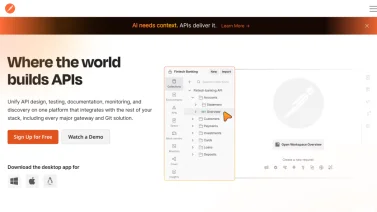

Postman
API platform


Inngest
Durable functions for modern apps
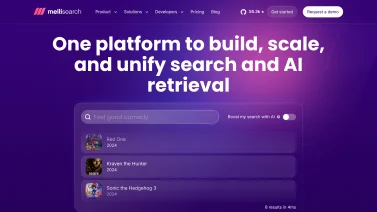

Meilisearch
Lightning fast search API
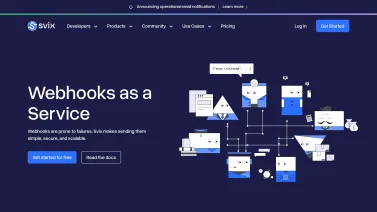

Svix
Webhooks as a service
API and Integration Platforms Connect Business Systems
API and integration platforms have evolved from specialized developer tools into comprehensive ecosystems that connect modern business systems and enable seamless data flow across organizations. Modern API and integration solutions consolidate API design, testing, management, deployment, middleware services, and monitoring into unified environments that streamline how organizations connect diverse applications. The transformation from manual point-to-point integrations to enterprise-wide integration platforms reflects organizational recognition that system connectivity and data synchronization directly influence operational efficiency and decision-making capability.
API and integration software extends far beyond simple system connections to become strategic infrastructure that influences how organizations share data, automate processes, and maintain competitive agility. By enabling rapid system connectivity, automating data synchronization, reducing integration complexity, and providing visibility across systems, modern API platforms enable organizations to operate as unified entities. Organizations implementing sophisticated API strategies report faster system connectivity, improved data accuracy, reduced integration costs, and enhanced operational agility.
Core API and Integration Capabilities
A robust core API and integration layer determines how seamlessly services communicate, data flows, and functionality extends across platforms. It enables developers to design, test, and govern interfaces while supporting flexible routing, synchronization, and analytics. Choosing solutions that balance performance, security, and scalability ensures that an organization can adapt quickly to evolving business needs.
API Design and Development
Comprehensive design tools enable building production-grade APIs. Visual API builders accelerate development. API specification standards ensure compatibility. Mock servers enable early testing. Versioning management handles API changes. Documentation generation automates documentation. These design capabilities enable professional API development.
API Testing and Quality Assurance
Automated testing validates API behavior. Unit testing verifies individual components. Integration testing validates system interactions. Performance testing measures response times. Security testing identifies vulnerabilities. Load testing validates scalability. Contract testing ensures API compatibility. These testing capabilities ensure API quality.
API Management and Governance
Centralized management enforces API governance. Rate limiting prevents abuse. Authentication management secures access. Analytics tracking measures API usage. Developer portal enables onboarding. Access control manages permissions. Policy enforcement ensures compliance. These governance capabilities manage API lifecycle.
Integration Platform as a Service (iPaaS)
Cloud-based integration eliminates infrastructure complexity. Pre-built connectors accelerate integration. Visual workflow design eliminates coding. Data transformation handles format conversion. Real-time synchronization keeps data current. Automation eliminates manual processes. Monitoring ensures reliability. These iPaaS capabilities simplify integration.
API Gateway and Routing
Centralized API gateway provides single access point. Request routing directs traffic efficiently. Rate limiting prevents overload. Authentication at gateway secures all APIs. Response transformation adapts responses. Protocol translation handles compatibility. Load balancing distributes requests. These gateway capabilities manage API traffic.
Data Integration and Synchronization
Data mapping connects systems logically. Transformation logic handles format changes. Real-time synchronization keeps data current. Batch processing handles large volumes. Error handling manages failures gracefully. Audit trails track all changes. These data capabilities ensure accuracy.
Monitoring and Analytics
Real-time monitoring tracks API performance. Usage analytics measure API adoption. Performance metrics identify bottlenecks. Error tracking finds problems. SLA monitoring ensures commitments. Cost analysis tracks expenses. These analytics enable optimization.
Key Benefits of API and Integration Platforms
Adopting an API and integration platform transforms how disparate applications communicate, delivering seamless data exchange that fuels faster business processes. By unifying services, organizations experience fewer manual handoffs, heightened reliability, and the flexibility to adapt quickly to changing demands, all while maintaining tighter control over security and compliance requirements.
Accelerated System Connectivity
Pre-built connectors dramatically reduce integration time. Visual integration eliminates coding. Rapid deployment enables quick implementation. Time-to-value reduces dramatically. These capabilities accelerate connectivity.
Improved Data Accuracy and Consistency
Real-time synchronization eliminates data delays. Automated validation ensures quality. Error handling prevents data corruption. Audit trails enable verification. These capabilities ensure data accuracy.
Reduced Integration Complexity and Costs
Visual integration reduces technical requirements. Pre-built connectors eliminate custom development. Managed services reduce operational overhead. Reduced staffing requirements lower costs. These efficiency improvements reduce costs.
Enhanced Operational Agility
Rapid system connectivity enables quick response. Automated processes reduce manual work. Real-time data enables better decisions. Scalable infrastructure supports growth. These capabilities improve agility.
Improved Security and Compliance
Centralized authentication improves security. Encryption protects sensitive data. Audit trails enable compliance verification. Access controls prevent unauthorized access. Policy enforcement ensures standards. These capabilities improve security.
Better Visibility and Control
Centralized monitoring provides visibility. Analytics reveal integration patterns. Performance metrics identify issues. Cost tracking shows spending. Governance ensures compliance. These capabilities improve visibility.
API and Integration Platform Categories
Modern enterprises rely on a spectrum of tools that enable seamless data exchange and service orchestration across disparate systems. These solutions range from environments that support the design, testing, and deployment of APIs to platforms that govern, secure, and monitor API traffic, as well as cloud-based services that connect SaaS applications and on-premise workloads, and comprehensive suites that facilitate enterprise-wide application integration and process automation.
API Development and Testing Platforms
Developer-focused platforms for API development. Postman provides comprehensive API tooling. Swagger enables specification-first development. SoapUI specializes in testing. These platforms serve developers.
API Management Platforms
Enterprise platforms for API governance. Apigee provides comprehensive management. AWS API Gateway handles routing. Azure API Management offers integration. Kong provides open-source options. These platforms manage APIs at scale.
Integration Platform as a Service (iPaaS)
Cloud-based integration services. MuleSoft provides enterprise capabilities. Zapier focuses on ease of use. Boomi handles complex integrations. These platforms simplify integration.
Enterprise Application Integration (EAI)
Enterprise middleware for complex integration. Tibco handles legacy integration. Software AG provides comprehensive tools. These platforms serve enterprise needs.
Current Trends in API and Integration
Enterprises are reshaping how they connect services as integration platforms evolve to meet increasingly complex data flows, security demands, and deployment models. Modern tools now blend flexible query languages, event streaming, intelligent automation, and support for disparate cloud environments, enabling developers to build responsive, scalable ecosystems without being tied to a single protocol or infrastructure.
GraphQL Adoption and REST Evolution
GraphQL increasingly complements REST. Precise data fetching reduces bandwidth. Real-time capabilities improve user experience. GraphQL adoption continues accelerating.
Event-Driven Architecture Adoption
Event-driven integration replaces polling. Webhooks enable real-time notifications. Asynchronous processing improves efficiency. Event-driven adoption continues growing.
AI-Powered Integration
Artificial intelligence automates integration. Intelligent matching finds connections. Automated data mapping eliminates manual work. AI integration continues accelerating.
Multi-Cloud and Hybrid Integration
Integration spans multiple clouds. Hybrid environments become standard. Vendor independence increases importance. Multi-cloud integration continues growing.
Selecting Appropriate API Solutions
Choosing the right API solution requires balancing technical demands with future growth plans, so decision-makers must weigh how intricate data flows will be, how the platform will handle increasing loads, and how well it integrates with existing tools and third-party services. This holistic view helps avoid costly re-architectures later.
Assessing Integration Complexity
Platform selection requires understanding needs. Evaluate system count and complexity. Determine real-time requirements. Assess data volume. Different needs benefit from different platforms.
Considering Scalability and Performance
Evaluate platform scalability. Request volume must be supported. Data volume requirements must be met. Performance under load matters. Growth planning informs selection.
Assessing Ecosystem and Connectors
Evaluate available connectors. Ecosystem breadth affects capabilities. Connector quality matters. Custom connector support helps. Ecosystem strength influences selection.
The Future of APIs and Integration
API and integration platforms will continue evolving toward greater automation, intelligence, and simplicity. Artificial intelligence will increasingly automate integration decisions. Real-time integration will become standard. Event-driven architectures will dominate. Organizations prioritizing API innovation position themselves for sustained competitive advantage.
Modern API and integration platforms represent essential infrastructure that directly impacts system connectivity, operational efficiency, and competitive agility. By enabling rapid system connectivity, automating data synchronization, reducing complexity, and providing visibility, API platforms enable organizations to operate as unified entities. Organizations implementing sophisticated API strategies gain significant competitive advantages through accelerated connectivity, improved efficiency, enhanced agility, and better decision-making.
Frequently Asked Questions
API and integration software connects separate applications so they can share data and trigger actions automatically. It translates different data formats, manages communication protocols, and orchestrates workflows across cloud services, on-premise systems, and third-party platforms. By centralising data exchange, it reduces manual entry, improves accuracy, and speeds up processes such as order fulfillment, customer updates, and reporting. The tools often include visual mapping, monitoring, and error handling to keep integrations reliable and scalable.
When evaluating API and integration platforms, focus on connectivity, data transformation, scalability, security, and monitoring. Look for pre-built connectors or the ability to create custom ones, support for multiple protocols such as REST, SOAP, and event-driven messaging, and robust mapping tools that handle complex data formats. Ensure the solution can scale with transaction volume, offers role-based access control, encryption, and audit logs, and provides real-time visibility into integration health.
API and integration software acts as a bridge that connects existing applications, databases, and services so they can share data and trigger actions automatically. It translates different data formats, handles authentication, and orchestrates workflows across ERP, CRM, marketing platforms, and legacy tools. By centralising communication, it reduces manual data entry, improves consistency, and enables new processes without replacing current systems, allowing the business to scale its technology stack efficiently.
Teams often underestimate the complexity of data mapping, leading to mismatched fields and broken workflows. Skipping a thorough inventory of existing endpoints can cause duplicate calls and performance issues. To avoid these problems, start with a detailed integration plan, involve both developers and business users in defining data contracts, and run iterative tests in a sandbox before going live. Clear documentation and monitoring also help catch errors early.