DevOps & CI/CD
Compare the best devops & ci/cd tools. Read reviews, compare features and pricing.




DevOps and CI/CD Drive Modern Software Delivery
DevOps and Continuous Integration/Continuous Deployment platforms have transformed software delivery from manual, error-prone processes into automated, reliable systems that enable organizations to ship code to production multiple times daily with confidence. Modern DevOps platforms consolidate source code management, automated testing, build orchestration, infrastructure provisioning, and deployment automation into integrated workflows that streamline how software teams develop, test, and release applications. The shift from traditional waterfall development with monthly or quarterly releases to continuous delivery with hourly or daily deployments reflects organizational recognition that rapid iteration directly drives competitive advantage and customer satisfaction.
DevOps extends far beyond individual tools to become a cultural and technical transformation that emphasizes collaboration between development and operations teams, automation of repetitive tasks, and continuous measurement and improvement. By automating build and deployment processes, implementing comprehensive testing, and monitoring applications throughout their lifecycle, modern DevOps practices enable teams to deliver features faster while maintaining high quality and reliability. Organizations implementing sophisticated DevOps practices report significantly faster time-to-market, fewer production incidents, improved team collaboration, and higher deployment frequency.
Core DevOps and CI/CD Components
A robust DevOps and CI/CD pipeline relies on a suite of interconnected tools that automate code integration, testing, deployment, and infrastructure management while providing visibility and security. These components work together to streamline workflows, reduce manual effort, and ensure reliable releases, enabling teams to deliver value faster and maintain high quality across environments.
Continuous Integration and Automated Build
Continuous Integration automatically builds and tests code whenever changes are committed, catching integration issues early. Version control system integration monitors source code repositories and triggers build processes when changes occur. Automated build systems compile code, resolve dependencies, and package applications for testing. Build parallelization accelerates build times by distributing compilation across multiple machines. Cache optimization reuses build artifacts across runs reducing unnecessary work. Artifact management stores build outputs enabling retrieval for deployment. These CI capabilities ensure that code commits are validated quickly, reducing the time developers spend debugging integration issues.
Automated Testing and Quality Assurance
Automated testing validates code functionality without manual testing, enabling rapid iteration without compromising quality. Unit testing validates individual components work correctly. Integration testing validates components work correctly together. End-to-end testing validates complete workflows from user perspective. Performance testing identifies performance degradation. Security testing identifies potential vulnerabilities. Code quality analysis identifies style violations and code smells. Coverage tracking ensures adequate test coverage. These automated testing capabilities catch bugs early when they are cheapest to fix, before code reaches production.
Continuous Delivery and Deployment
Continuous Deployment automates the entire process from tested code to production deployment. Deployment pipelines orchestrate sequences of build, test, and deployment stages. Environment management manages configuration differences across development, staging, and production environments. Release management controls which code changes are deployed and when. Blue-green deployments enable zero-downtime deployments by switching between two identical production environments. Canary deployments test changes with limited production traffic before full rollout. Rollback capabilities enable quickly reverting failed deployments. These deployment automation capabilities enable shipping code to production multiple times daily with minimal manual intervention.
Infrastructure as Code
Infrastructure as Code enables defining infrastructure using code rather than manual configuration. Infrastructure configuration files describe required resources including servers, databases, and networking. Version control of infrastructure definitions enables tracking changes and collaborating on infrastructure. Reproducible deployments ensure infrastructure is provisioned identically across environments. Rapid environment creation enables spinning up new environments for testing. Self-service infrastructure enables development teams to provision resources without operations team involvement. These infrastructure capabilities decouple development and operations teams, enabling faster iteration.
Container Orchestration and Kubernetes
Container orchestration platforms manage containerized applications at scale. Container runtime environments package applications consistently across environments. Container images capture complete application state including dependencies. Orchestration platforms handle container deployment, scaling, and resource management. Self-healing capabilities automatically restart failed containers. Service discovery enables containers to find and communicate with dependencies. Load balancing distributes traffic across container instances. Network isolation provides security. Kubernetes has emerged as the industry-standard container orchestration platform. These container capabilities enable deploying and scaling applications reliably across hybrid cloud environments.
Monitoring and Observability
Comprehensive monitoring provides visibility into application and infrastructure health. Metrics collection tracks quantitative performance data including CPU, memory, and response times. Log aggregation centralizes log data from distributed systems. Distributed tracing enables tracking requests across microservices. Real-time alerting notifies teams when issues occur. Performance baselines identify normal behavior enabling anomaly detection. Dashboards provide visualizations enabling quick understanding of system health. Root cause analysis tools help identify why issues occurred. These monitoring capabilities enable rapid issue identification and resolution.
Security and Compliance Automation
DevOps security practices embed security throughout the development process. Dependency scanning identifies vulnerable libraries in dependencies. Static analysis identifies security vulnerabilities in code. Secret management prevents accidentally committing credentials. Container scanning ensures container images are secure. Compliance automation enforces security policies. Audit logging tracks all changes enabling investigation. Access control ensures only authorized personnel perform sensitive operations. These security practices ensure applications remain secure throughout their lifecycle.
Key Benefits of DevOps Implementation
Adopting DevOps and continuous integration/continuous delivery tools reshapes how software moves from code to production, creating a feedback loop that accelerates change while maintaining stability. By automating pipelines, aligning development and operations goals, and fostering shared responsibility, organizations unlock faster releases, higher quality outcomes, and more efficient use of resources.
Dramatically Increased Deployment Frequency
DevOps automation enables organizations to deploy code to production multiple times daily rather than monthly or quarterly. Automated testing provides confidence that changes are safe. Automated deployment eliminates manual errors. Feature flags enable toggling features on and off without redeployment. These capabilities enable deployment frequency increasing from quarterly to daily or hourly. Organizations report deployment frequency increases of 100-1000x after DevOps implementation.
Reduced Time to Market for Features
Automated processes accelerate development cycles from weeks or months to days or hours. Continuous Integration catches issues early when they are cheap to fix. Parallel testing enables validating code changes quickly. Continuous deployment enables releasing features immediately after they pass testing. These capabilities dramatically reduce time from feature conception to customer availability. Organizations report feature time-to-market reductions of 50-80% after DevOps implementation.
Improved Application Reliability and Quality
Comprehensive automated testing ensures code quality and catches bugs early. Automated deployment reduces human errors that cause production incidents. Monitoring enables identifying issues before they impact users. These practices improve application reliability and reduce production incident frequency. Organizations implementing DevOps report incident reductions of 30-60%.
Enhanced Team Collaboration
DevOps practices emphasize collaboration between development and operations teams. Shared infrastructure definitions enable both teams understanding how applications will be deployed. Shared monitoring and alerting keeps both teams aware of production issues. Automated runbooks document operational procedures. These collaboration practices reduce conflicts and improve communication.
Better Cost Control and Resource Efficiency
Infrastructure as Code enables efficient resource utilization. Auto-scaling adjusts resources based on demand rather than maintaining fixed capacity. Container efficiency enables running multiple applications on shared infrastructure. Automated resource management optimizes costs. These practices reduce infrastructure costs while improving utilization. Organizations report 20-40% infrastructure cost reductions after container adoption.
Rapid Issue Resolution
Comprehensive monitoring enables rapid issue identification. Root cause analysis tools help quickly understand why issues occurred. Automated rollback enables quickly reverting failed changes. These capabilities reduce mean time to resolution (MTTR) significantly. Organizations report MTTR reductions of 50-80% after DevOps implementation.
DevOps Tool Categories and Specializations
Understanding the landscape of DevOps tools requires recognizing how different solutions address distinct stages of software delivery. Some platforms combine planning, coding, testing, and deployment under a single umbrella, while others excel at automating pipelines, orchestrating containers, or provisioning infrastructure as code. Each specialization brings unique capabilities that shape workflow efficiency.
Integrated DevOps Platforms
Comprehensive DevOps platforms integrate source control, CI/CD, monitoring, and infrastructure management. Integrated platforms reduce tool sprawl and integration complexity. These platforms are ideal for organizations seeking unified DevOps environments. Examples include GitLab, Azure DevOps, and GitHub with Actions.
Specialized CI/CD Platforms
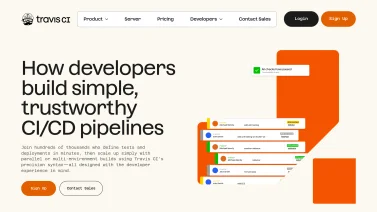
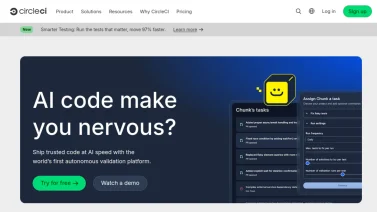
Focused CI/CD platforms emphasize build, test, and deployment automation. These platforms typically provide superior CI/CD capabilities compared to integrated platforms. They integrate with external monitoring and infrastructure tools. Examples include Jenkins, CircleCI, and TravisCI.
Container and Kubernetes Platforms
Container-focused platforms emphasize container deployment and orchestration. These platforms provide Kubernetes-native capabilities. They integrate with CI/CD systems for automated deployment. Examples include Kubernetes, Docker, and Kubernetes-focused distributions.
Infrastructure as Code and Provisioning
Infrastructure tools enable defining and provisioning infrastructure using code. These tools manage infrastructure state and enable reproducible deployments. They support multiple cloud providers and on-premises infrastructure. Examples include Terraform, CloudFormation, and Ansible.
Current Trends in DevOps
The landscape of DevOps is evolving rapidly, driven by tighter integration between development and operations, and a growing emphasis on automation, security, and scalability. Modern teams are adopting practices that blend code management with infrastructure provisioning, leverage machine learning to anticipate issues, and navigate complex multi-cloud environments, all while embedding security throughout the pipeline.
GitOps and Infrastructure as Code
GitOps treats infrastructure and application configuration as code stored in version control. Changes to infrastructure are made through pull requests on version-controlled configuration files. Automated reconciliation ensures actual infrastructure matches desired state. This approach provides audit trails and enables reverting changes. GitOps is increasingly becoming the standard for managing infrastructure and applications.
AI-Powered DevOps and Predictive Analytics
Artificial intelligence is increasingly applied to DevOps. Anomaly detection algorithms identify unusual patterns in metrics. Predictive analytics forecast capacity needs before issues occur. AI-powered root cause analysis identifies why incidents occurred. Intelligent alerting reduces noise from non-critical alerts. These AI capabilities are improving DevOps efficiency and reducing incident frequency.
Enhanced Security and DevSecOps
Security increasingly integrates into DevOps pipelines rather than being an afterthought. Automated security scanning occurs throughout the development pipeline. Container image scanning ensures images are secure before deployment. Secret management prevents credentials in code. Compliance automation enforces security policies. This DevSecOps approach improves security posture while maintaining deployment velocity.
Multi-Cloud and Hybrid Cloud Adoption
Organizations increasingly deploy applications across multiple cloud providers and on-premises infrastructure. DevOps tooling increasingly emphasizes multi-cloud support. Infrastructure as Code enables consistent deployment across cloud providers. Container orchestration enables workload portability. These capabilities enable organizations to avoid vendor lock-in and optimize costs.
Selecting Appropriate DevOps Solutions
Choosing the right DevOps and CI/CD platform requires aligning tool capabilities with existing workflows, future scalability goals, and the skill set of the engineering team. A holistic view helps avoid costly mismatches and ensures smooth adoption across the organization. Consideration of integration points, automation depth, and support for both cloud and on premise environments further refines the decision process.
Assessing Current Development and Infrastructure Practices
Selecting DevOps tools requires understanding current practices and pain points. Organizations should evaluate deployment frequency, deployment duration, incident frequency, and mean time to recovery. Tools should address identified pain points rather than imposing additional complexity. Pilot implementations enable evaluating tools before organization-wide adoption.
Considering Team Skills and Learning Curve
DevOps tools vary significantly in complexity. Simple tools enable rapid adoption but may limit advanced capabilities. Complex tools provide powerful capabilities but require significant learning. Organizations should select tools aligned with team expertise or provide adequate training.
Integration with Existing Infrastructure
Evaluate tools' ability to integrate with existing systems. Strong integration with source control, cloud providers, and monitoring systems is essential. Organizations should understand API capabilities enabling custom integrations. Pre-built integrations reduce implementation complexity.
The Future of DevOps
DevOps will continue evolving toward greater automation, improved observability, and enhanced security. Artificial intelligence will increasingly automate routine DevOps tasks. GitOps will become the standard for infrastructure and application management. Security will continue integrating more deeply into development pipelines. Organizations prioritizing DevOps transformation position themselves to compete effectively in increasingly competitive markets.
Modern DevOps platforms represent essential business infrastructure that directly impacts software delivery speed, application reliability, and team productivity. By automating repetitive tasks, implementing comprehensive testing, and enabling rapid iteration, DevOps practices enable organizations to ship code faster while maintaining high quality. Organizations embracing DevOps practices and implementing sophisticated tooling gain significant competitive advantages through faster feature delivery, improved reliability, and enhanced team collaboration.
Frequently Asked Questions
DevOps and CI/CD software automates the process of building, testing, and deploying code so changes move from development to production quickly and reliably. It integrates version control, automated testing, and deployment pipelines, reducing manual steps and the risk of errors. By providing visibility into each stage, it helps teams collaborate, detect problems early, and deliver features faster while maintaining stability and compliance.
Look for robust pipeline automation that supports multiple languages and integrates with version control, testing, and deployment tools. Strong orchestration features, such as parallel job execution and conditional workflows, improve speed and flexibility. Visibility into build status, logs, and metrics helps teams troubleshoot quickly. Security controls like secret management and policy enforcement protect code throughout the pipeline. Finally, scalability to handle growing workloads and support for both cloud and on-premise environments ensures the solution can grow with the organization.
DevOps and CI/CD tools act as a bridge between development, testing, operations and existing enterprise platforms. They connect to source control, issue trackers, monitoring services and cloud infrastructure through APIs or plugins, allowing code changes to flow automatically into build, test and deployment pipelines. This creates a unified workflow that complements existing ERP, CRM or data warehouses without replacing them, and helps keep all systems synchronized.
Teams often underestimate cultural change, treating automation as a plug-in rather than a shift in collaboration. They may also skip incremental rollout, causing pipeline failures that halt releases. To avoid these issues, start with a pilot project, involve both development and operations early, define clear metrics for success, and invest in training that reinforces shared responsibility for code quality and delivery speed.