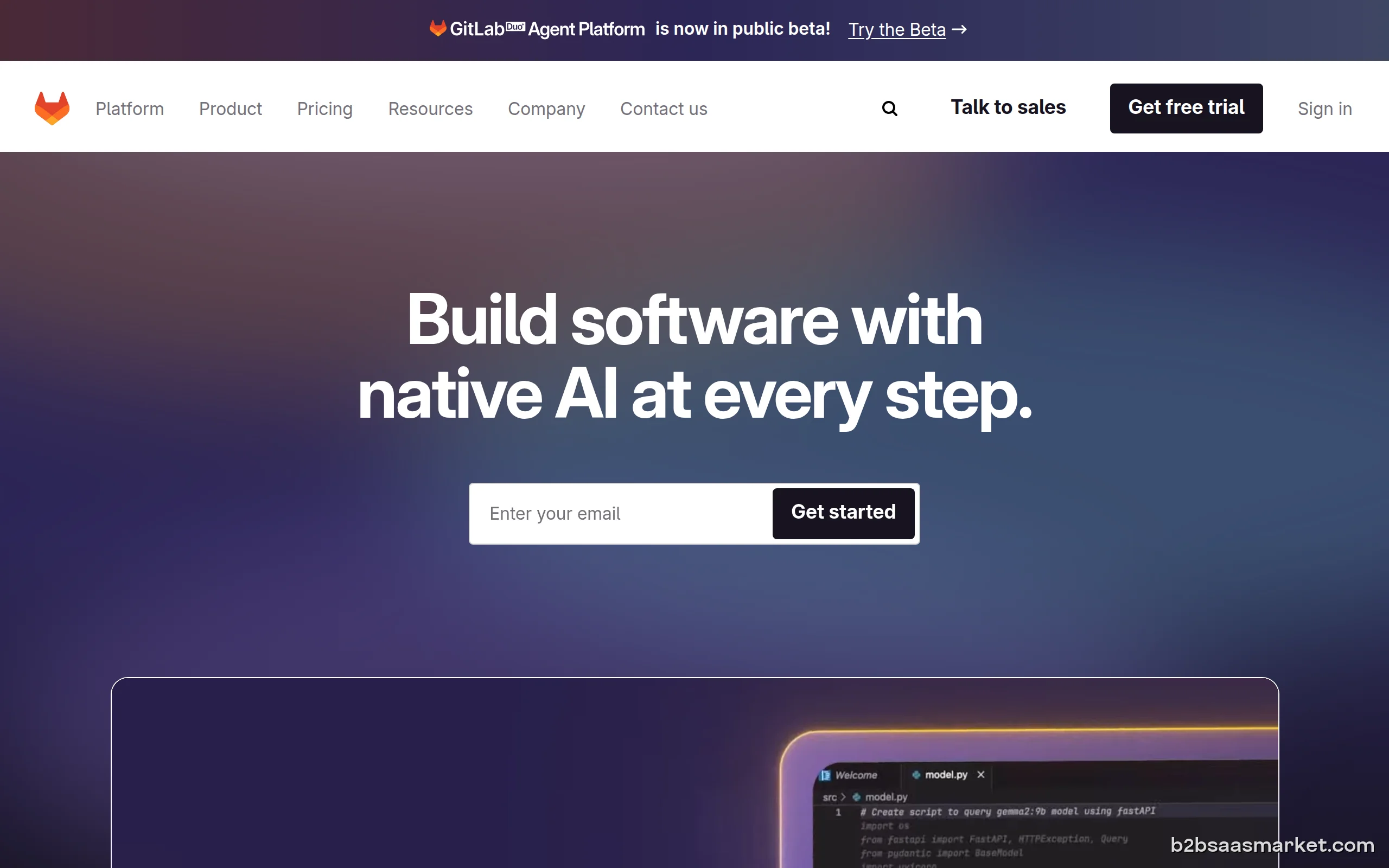
GitLab is a comprehensive DevOps platform that empowers teams to collaborate efficiently on software development projects. It combines source control, CI/CD, and project management tools in one application, enhancing productivity and accelerating delivery. Ideal for developers, project managers, and organizations aiming for streamlined workflows and faster project timelines.
GitLab Review
GitLab is an all-in-one DevOps platform designed to streamline the software development lifecycle. By integrating multiple tools into a single application, GitLab enables teams to manage everything from code repositories to continuous integration and delivery (CI/CD) pipelines. This unification not only reduces the complexity of using multiple disparate tools but also fosters better collaboration among team members, ultimately accelerating the pace at which software can be delivered to market.
Who It's For
GitLab is particularly beneficial for software development teams, ranging from small startups to large enterprises. Organizations that prioritize agile methodologies and seek to enhance collaboration among developers, project managers, and other stakeholders will find GitLab to be a valuable asset. Additionally, teams looking to improve their CI/CD processes will appreciate the robust features that GitLab offers.
Core Functionality
The core functionality of GitLab revolves around its integrated approach to DevOps. Users can manage their source code through repositories, track issues, and plan projects all within the same interface. GitLab’s CI/CD capabilities allow users to automate testing and deployment, ensuring that code changes are integrated and delivered quickly and reliably. Furthermore, its monitoring tools provide insights into performance, allowing teams to make data-driven decisions.
Business Benefits
One of the primary benefits of using GitLab is the enhanced collaboration it fosters among team members. The platform’s ability to integrate various stages of the development process helps eliminate silos, leading to better communication and increased productivity. Additionally, with its comprehensive analytics and reporting features, organizations can gain valuable insights into their development processes, allowing for continuous improvement. By automating manual tasks, GitLab also reduces the risk of human error, leading to more reliable software delivery.
Conclusion/Verdict
In conclusion, GitLab is a powerful DevOps platform that caters to the needs of modern software development teams. Its all-in-one approach simplifies the development process, making it easier for teams to collaborate and deliver high-quality software quickly. Whether you are a small startup or a large enterprise, GitLab provides the tools necessary to enhance your DevOps practices and drive business success.
Key Features
- Integrated source control management
- Continuous integration and delivery (CI/CD)
- Project planning and issue tracking
- Real-time collaboration tools
- Built-in container registry
- Security and compliance features
- Advanced analytics and reporting
- Monitoring and performance tracking
- Customizable pipelines
- Integration with popular third-party tools
GitLab Use Cases
- A software development team looking to streamline their workflows and reduce tool fatigue.
- An organization wanting to implement CI/CD practices to improve release cycles.
- A project manager needing real-time insights into project progress and team performance.
- A startup that requires a scalable solution to manage its development processes as it grows.
- A large enterprise needing robust security and compliance measures for its software projects.
GitLab Pros & Cons
- All-in-one platform that integrates multiple tools, reducing complexity.
- Powerful CI/CD capabilities that automate testing and deployment.
- Enhanced collaboration features that facilitate communication among team members.
- Robust analytics and reporting tools for data-driven decision making.
- Customizable workflows to fit specific team needs.
- Strong security features, including built-in compliance and vulnerability scanning.
- Active community and extensive documentation for support.
- The learning curve can be steep for new users due to its extensive functionality.
- Some users report occasional performance issues with large repositories.
- Advanced features may require a higher subscription tier, leading to increased costs.
- Integration with third-party tools may not always be seamless.
- User interface can feel overwhelming for teams new to DevOps practices.
Integrations
User Reviews
A good and reliable service. I use it for personal repositories.
Do you appreciate your health? If so, stay away! This product is cancer inducing
Frequently Asked Questions
GitLab is a comprehensive DevOps platform that provides tools for source code management, continuous integration and delivery (CI/CD), project management, and collaboration, all in one application.
GitLab enhances collaboration by integrating various tools into a single platform, allowing team members to communicate, share code, and track project progress more efficiently.
Yes, GitLab is suitable for organizations of all sizes, from small startups to large enterprises, providing scalable solutions that grow with your needs.
GitLab includes built-in security measures such as vulnerability scanning, compliance checks, and role-based access controls to ensure that your projects are secure.
GitLab offers a free tier with essential features, allowing users to explore the platform before committing to a paid plan.
GitLab supports integrations with various popular tools and platforms, including Jira, Slack, Kubernetes, and many others, enhancing its functionality and usability.
GitLab's CI/CD feature automates the process of testing and deploying code changes, allowing teams to integrate their work seamlessly and deliver software more quickly and reliably.
Quick Info
- Category DevOps & CI/CD
- Rating 1.7/5
- Free Trial Yes
- Trial Period 14 days
- API Available Yes
- Deployment Cloud

Community
Mobile Apps
Company Info
- Company GitLab Inc.
- Founded 2014
- Headquarters San Francisco, United States
- Employees 201-500
 More tools from United States →
Target Audience
GitLab is ideal for software development teams, project managers, and organizations of all sizes that prioritize collaboration and efficiency in their development processes. Its comprehensive features cater to both startups and large enterprises looking to enhance their DevOps practices.
Platforms