Finance & Accounting
Compare the best finance & accounting tools. Read reviews, compare features and pricing.
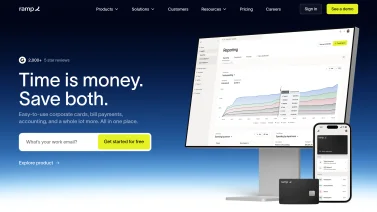

Ramp
Corporate cards and spend management


Brex
Financial stack for startups


Open Collective
Empowering communities through transparent finance

Orb
Transforming billing with usage-based infrastructure

Lago
Simplifying metering and billing for SaaS


Mosaic
Empowering Financial Strategy Through Innovation


AngelList
Revolutionize Your Startup Fundraising


Zuora
Transforming Subscription Management for Businesses


Mercury
Banking reimagined for startups


Pipe
Unlock Growth with Revenue-Based Financing

Hyperline
Simplifying Billing for B2B SaaS Companies


Pry
Streamline your startup's financial journey


Wise
Send money abroad with low fees
Finance and Accounting Software Empowers Business Financial Management
A modern finance and accounting platform centralizes core financial processes, allowing businesses to record transactions, reconcile accounts, and generate statements from a single interface. Automation reduces manual data entry, while built-in validation rules help maintain accuracy across ledgers. Real-time visibility into cash flow and profitability enables quicker decision making, and configurable reporting tools adapt to regulatory requirements without extensive custom coding. Integration capabilities connect the system to payroll, procurement, and CRM applications, creating a cohesive financial ecosystem.
By consolidating budgeting, forecasting, and variance analysis, the software provides a unified view of financial performance that supports strategic planning. Scenario modeling features let users test the impact of market changes or internal initiatives without altering historical data. Audit trails capture every modification, ensuring compliance with internal controls and external regulations. Cloud-based deployments deliver secure access for distributed teams, while role-based permissions safeguard sensitive information. Continuous updates incorporate the latest accounting standards, reducing the burden of manual rule changes and keeping the organization aligned with best practices.
Core Capabilities of Finance and Accounting Software
A robust finance and accounting platform consolidates core financial processes into a unified system, enabling organizations to maintain accurate records, streamline cash flow, and ensure compliance. By automating routine tasks and providing real-time visibility into financial health, these solutions empower teams to make informed decisions, reduce manual effort, and support strategic growth initiatives.
General ledger and chart of accounts management
A robust general ledger forms the backbone of any finance and accounting suite, allowing organizations to record every transaction in a centralized, searchable repository. The chart of accounts can be customized to reflect the unique structure of a business, supporting multiple dimensions such as departments, locations, and cost centers. Real-time posting ensures that balances are always up to date, while built-in validation rules prevent common entry errors. Users can drill down from summary balances to the underlying journal entries, facilitating audit trails and simplifying month-end close processes. The system also supports multi-currency handling, enabling seamless consolidation for global enterprises without manual rekeying.
Accounts payable automation and invoice processing
Automation of accounts payable streamlines the entire invoice lifecycle, from capture to payment. Optical character recognition and machine learning extract key data from scanned documents, reducing manual data entry and minimizing errors. Workflow engines route invoices to the appropriate approvers based on configurable rules such as amount thresholds or vendor classifications. Once approved, the software can schedule payments via electronic funds transfer, ACH, or virtual card, ensuring timely settlement and taking advantage of early-payment discounts. Comprehensive audit logs capture every action, providing visibility for internal controls and external audits.
Accounts receivable tracking and cash application
Effective accounts receivable management accelerates cash inflows by tracking outstanding invoices and automating the cash application process. The system matches incoming payments to open invoices using reference numbers, amounts, and customer data, reducing the need for manual reconciliation. Automated reminders and dunning letters can be triggered based on customizable aging criteria, helping to improve collection rates while maintaining professional communication. Real-time dashboards display key metrics such as days sales outstanding and aging buckets, giving finance teams insight into customer payment behavior. Integration with banking feeds further speeds up posting and reduces reconciliation effort.
Expense reporting and employee reimbursement
Expense reporting tools simplify the capture, approval, and reimbursement of employee expenditures. Mobile apps allow staff to photograph receipts, automatically extract line-item details, and categorize costs according to company policy. Workflow rules enforce compliance by flagging out-of-policy items and routing reports to designated approvers. Once approved, reimbursements can be processed through direct deposit or payroll runs, ensuring employees receive funds promptly. The software consolidates expense data for analysis, helping organizations identify spending trends, negotiate better vendor terms, and enforce budgetary controls across departments.
Financial reporting and regulatory compliance
Financial reporting capabilities provide a single source of truth for regulatory filings, internal analysis, and stakeholder communication. Pre-built report templates cover balance sheets, income statements, cash flow statements, and compliance disclosures, while drag-and-drop designers enable custom report creation without coding. Data can be exported in multiple formats for submission to tax authorities or auditors, and built-in controls enforce versioning and access permissions. Real-time consolidation consolidates subsidiary data, supporting multi-entity and multi-currency environments. Audit trails capture every modification, ensuring transparency and facilitating both internal and external compliance reviews.
Budgeting, forecasting and variance analysis
Budgeting and forecasting modules empower finance teams to plan future performance and compare it against actual results. Users can build multi-year budgets using flexible drivers such as headcount, sales volume, or market growth, and then run scenario analyses to assess the impact of strategic decisions. Variance analysis tools automatically highlight deviations between forecasted and actual figures, linking them to underlying transactions for root-cause investigation. Collaborative features allow stakeholders to input assumptions and review drafts, while roll-forward capabilities streamline the transition from one planning cycle to the next, maintaining continuity and data integrity.
Integration with banking, payroll and ERP systems
Seamless integration with banking, payroll, and ERP systems eliminates duplicate data entry and ensures consistency across the enterprise. Direct feeds from banks import transaction data for automatic reconciliation, while outbound payment files can be transmitted securely for processing. Payroll connectors synchronize employee compensation data, tax withholdings, and benefit deductions, reducing the risk of errors in both payroll and general ledger postings. ERP integrations enable the flow of inventory, sales, and procurement data into the finance module, supporting end-to-end visibility of the financial impact of operational activities. Standard APIs and pre-built connectors accelerate implementation and reduce reliance on custom development.
Business Benefits of Adopting Finance and Accounting Software
Adopting finance and accounting software transforms core financial operations by automating routine tasks, consolidating data, and providing instant insight into monetary health. This shift reduces reliance on manual spreadsheets, accelerates reporting cycles, and strengthens oversight of cash flow and compliance. The resulting efficiency gains free staff to focus on analysis, strategic planning, and value-adding activities.
Improved accuracy and reduced manual entry errors
By automating data capture and validation, finance and accounting software dramatically improves the accuracy of financial records. The system cross-checks entries against predefined rules, catching inconsistencies before they become entrenched. This reduces the reliance on manual data entry, which is prone to typographical mistakes and oversight. As a result, the integrity of ledgers is maintained, and the risk of costly errors in reporting or decision making is minimized, allowing finance teams to focus on analysis rather than correction.
Faster close cycles and real-time financial visibility
When transactions are posted in real time, organizations can close their books faster and gain immediate insight into financial performance. The software consolidates data from multiple sources, updates balances instantly, and provides dashboards that reflect the current state of accounts. This eliminates the lag associated with batch processing and manual reconciliations, enabling executives to monitor cash flow, profitability, and key metrics as they happen, which supports timely strategic actions.
Enhanced control over cash flow and working capital
Integrated cash management modules give companies a clearer view of inflows and outflows, helping to optimize working capital. The system tracks receivables, payables, and bank balances in a single interface, highlighting potential shortfalls before they materialize. By forecasting cash positions and suggesting optimal payment schedules, it empowers finance professionals to allocate resources more efficiently, negotiate better terms with suppliers, and avoid unnecessary borrowing.
Streamlined audit preparation and compliance reporting
Preparing for audits becomes less burdensome when all financial data is stored in a searchable, organized repository. The software logs changes, maintains audit trails, and generates compliance reports that align with regulatory standards. This streamlines the collection of supporting documentation and reduces the time spent gathering evidence. Consequently, auditors can verify the accuracy of statements more quickly, and organizations can demonstrate adherence to policies with confidence.
Lower operational costs through automation
Automation of routine tasks such as invoice processing, expense allocation, and reconciliation cuts down on labor-intensive activities. By delegating repetitive work to the system, staff can be redeployed to higher-value initiatives, and the overhead associated with manual processing diminishes. The reduction in paper handling, data entry, and error correction translates into lower operational expenses, while also supporting a more sustainable, digital workflow.
Better decision making with consolidated data
When financial information from disparate departments is aggregated into a unified platform, decision makers gain a holistic perspective of the business. The software consolidates general ledger data, budgeting, forecasting, and performance metrics, presenting them in coherent reports and visualizations. This comprehensive view enables executives to identify trends, assess risk, and evaluate the impact of strategic choices with greater confidence, ultimately driving more informed and effective business outcomes.
Key Product Categories in the Finance and Accounting Space
The finance and accounting landscape is divided into distinct software families, each addressing a core business need. Core accounting platforms maintain the ledger and support day-to-day bookkeeping, while payable solutions streamline vendor payments and expense tracking. Receivable tools accelerate invoice processing and cash application, and FP&A systems enable strategic budgeting, forecasting, and performance analysis.
General ledger and core accounting platforms
A robust general ledger and core accounting platform serves as the foundation for financial data integrity, consolidating transactions across the enterprise into a single source of truth. It automates journal entries, supports multi-entity and multi-currency environments, and provides real-time reporting capabilities that enable finance teams to monitor performance and ensure regulatory compliance.
Accounts payable and expense management solutions
Effective AP and expense management platforms automate invoice capture, routing, and approval, reducing manual data entry and accelerating payment cycles. Integrated expense tools enforce policy compliance, digitize receipt handling, and streamline reimbursement workflows. By linking to general ledger and cash management modules, these solutions provide real-time visibility into liabilities, improve audit trails, and support better cash forecasting across the organization.
Accounts receivable and cash application tools
Effective management of incoming payments and invoice tracking relies on robust accounts receivable and cash application solutions. These tools automate invoice generation, match payments to open items, and streamline dispute resolution, reducing manual effort and accelerating cash flow. Integration with ERP and banking systems ensures data consistency, while reporting features provide visibility into aging balances and collection performance.
Financial planning and analysis (FP&A) systems
These systems enable finance teams to consolidate historical data, model future scenarios, and generate actionable insights for budgeting, forecasting, and variance analysis. By integrating with ERP and CRM platforms, they automate data collection and reduce manual spreadsheet work. Advanced analytics and visualization tools help stakeholders evaluate performance trends, assess strategic initiatives, and support data-driven decision making.
Current Trends Shaping Finance and Accounting Software
The finance and accounting software landscape is evolving rapidly, driven by shifting business priorities and technological advances. Organizations now demand solutions that seamlessly integrate with cloud environments, leverage intelligent automation, provide intuitive analytics, and uphold stringent security standards. These forces collectively reshape how financial data is processed, analyzed, and protected.
Cloud-based deployment and subscription pricing models
Adopting cloud-based deployment allows finance teams to access applications from any device, while subscription pricing spreads costs over predictable intervals. This model reduces upfront capital expenditure and simplifies upgrades, as providers handle maintenance and infrastructure. Organizations benefit from scalable resources that align with seasonal transaction volumes and growth plans.
AI-driven automation for invoice matching and anomaly detection
By leveraging machine learning, finance platforms can automatically match invoices to purchase orders, reducing manual entry and errors. The system scans line items, validates amounts, and flags discrepancies for review. Integrated anomaly detection identifies unusual patterns, such as duplicate submissions or outlier costs, helping auditors intervene early.
Embedded analytics and self-service reporting dashboards
Embedded analytics integrate directly within finance platforms, delivering real-time insights without requiring separate BI tools. Users can build self-service reporting dashboards that pull from transactional data, customize visualizations, and drill down into specific accounts. This empowers accountants to make data-driven decisions quickly, enhancing strategic planning and operational efficiency.
Increased focus on data security and regulatory compliance
Organizations are prioritizing robust data protection and strict regulatory adherence when evaluating finance and accounting platforms. Modern solutions embed encryption, role-based access controls, and continuous monitoring to safeguard sensitive financial records. Automated compliance modules also help firms stay aligned with evolving standards, reducing audit risk and operational disruption.
Guidelines for Selecting the Right Finance and Accounting Solution
Choosing a finance and accounting platform requires a balanced view of business needs, technical compatibility, and long-term viability. The decision process should weigh how well the solution aligns with core financial processes, its ability to grow with the organization, and the overall cost and timeline associated with deployment and ongoing support.
Define functional requirements and integration needs
Begin by cataloguing core accounting processes such as ledger management, invoicing, and financial reporting, then map these to required system capabilities. Consider how the solution must exchange data with existing ERP, payroll, and CRM platforms, noting the need for APIs or pre-built connectors. Clear definition of functional gaps and integration points guides selection and reduces downstream customization effort.
Evaluate scalability, user experience and support options
When comparing options, look for platforms that can grow alongside the organization, supporting additional users, entities, or transaction volumes without performance loss. User experience should be intuitive, with role-based dashboards and minimal training overhead. Evaluate the provider's support model, including availability of live assistance, knowledge bases, and community forums, to ensure issues are resolved promptly.
Assess total cost of ownership and implementation timeline
Calculate the full cost picture by adding license fees, implementation services, training, and ongoing maintenance, rather than focusing solely on upfront price. Factor in the time required to configure, test, and roll out the system, as extended timelines can increase labor expenses and delay benefits. A realistic total cost of ownership helps justify the investment.
The Future Direction of Finance and Accounting Software
Artificial intelligence is reshaping finance and accounting platforms by automating routine tasks such as data entry, invoice matching, and expense categorization. Machine learning models analyze transaction patterns to flag anomalies and suggest corrective actions, reducing manual review time. Cloud-native architectures enable real-time collaboration across distributed teams, while APIs facilitate seamless integration with ERP, payroll, and banking systems. As these capabilities mature, organizations can expect faster closing cycles and more strategic use of financial data.
Future finance suites are moving toward modular designs that allow businesses to add or replace components such as tax engines, budgeting tools, or reporting dashboards without overhauling the entire system. Built-in compliance frameworks keep pace with evolving regulations by automatically updating rule sets and generating audit-ready documentation. Emerging blockchain integrations provide immutable transaction records, enhancing trust and simplifying reconciliation. Predictive analytics will increasingly guide budgeting decisions, offering scenario modeling that reflects both internal trends and external market influences.
Frequently Asked Questions
Finance and accounting software automates core financial tasks such as bookkeeping, invoicing, expense tracking and payroll processing. It consolidates transactions into a central ledger, generates financial statements, and supports tax compliance by organizing data for reporting. The system also provides real-time visibility into cash flow, budgets and profitability, helping decision makers monitor performance, reduce manual errors and streamline audit preparation.
Look for robust general ledger functions, automated journal entries and flexible chart of accounts, because they form the core of financial reporting. Real-time cash management, bank reconciliation and multi-currency support are essential for businesses that handle diverse transactions. Integrated expense tracking, invoice processing and tax calculation reduce manual effort. Strong audit trails, role-based permissions and compliance tools help maintain data integrity and meet regulatory requirements.
Finance & Accounting software typically connects to ERP, CRM, payroll and inventory platforms through APIs or built-in connectors, allowing data to flow automatically between departments. When an invoice is entered, the transaction can update the general ledger, trigger payment processing, and reflect inventory changes without manual re-entry. Seamless integration reduces duplicate effort, improves data accuracy, and gives finance teams a single source of truth across the organization.
Typical issues include incomplete data migration, users resisting new workflows, and insufficient training that leads to errors in posting transactions. Teams avoid these pitfalls by planning a phased rollout, cleaning and mapping data before import, involving key finance staff in configuration, and providing hands-on training sessions with realistic scenarios. Ongoing support and clear documentation also help maintain confidence and reduce disruption during the transition.