
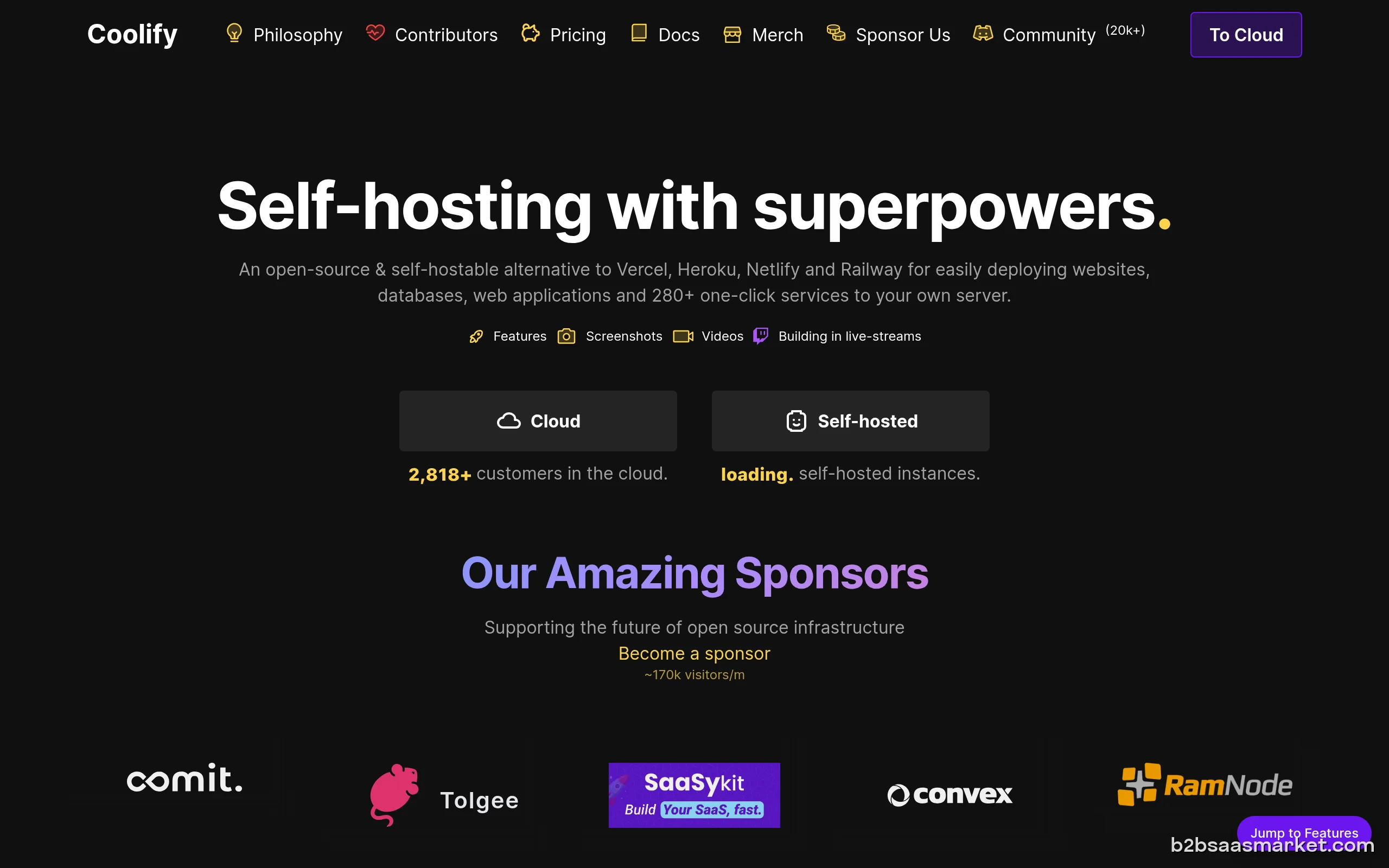
Coolify is a self-hosting solution that empowers businesses to manage their applications with ease and flexibility.
Coolify Review
In the ever-evolving landscape of software solutions, Coolify emerges as a robust self-hosting platform that offers unparalleled flexibility and user control. With its user-friendly interface and powerful features, it enables businesses to manage their applications effectively without the constraints of traditional hosting environments.
Who It's For
Coolify is designed for developers, tech startups, and mid-sized enterprises looking for a customizable self-hosting solution. Ideal for teams that require greater control over their infrastructure and data, Coolify caters to those who want to harness the power of self-hosting without compromising on ease of use.
Core Functionality
Coolify provides a suite of features including automated deployments, integrated CI/CD pipelines, and one-click app installations. Users can manage multiple applications from a single dashboard, configure custom domains, and leverage SSL certificates for enhanced security. Additionally, Coolify supports Docker containers, making it a versatile choice for developers.
Business Benefits
By utilizing Coolify, businesses can experience significant ROI and efficiency gains. The self-hosting capabilities reduce reliance on third-party hosting services, leading to cost savings over time. Furthermore, with automated processes and streamlined application management, teams can focus on core projects rather than spending time on maintenance tasks.
Coolify stands out as a powerful tool for any organization looking to take control of their hosting environment while enjoying a seamless user experience.
Key Features
- User-friendly dashboard for application management
- One-click deployment for various web apps
- Customizable templates for different hosting environments
- Built-in monitoring tools for performance tracking
- Automated backups and restore options
- Multi-user access with role-based permissions
- Support for container orchestration with Docker
- Integration with CI/CD pipelines for seamless updates
Coolify Use Cases
- Launching a new web application quickly
- Managing multiple microservices in a single environment
- Automating deployment processes for faster releases
- Setting up a secure environment for sensitive data
- Testing applications in a controlled self-hosted environment
Coolify Pros & Cons
- Empowers users with full control over their hosting environment
- Cost-effective solution compared to traditional hosting services
- Highly customizable to fit specific business needs
- Robust community support and documentation available
- Scalable architecture to accommodate growing applications
- Requires technical knowledge for optimal setup and management
- Initial setup can be time-consuming for non-technical users
- Limited third-party integrations compared to some competitors
User Reviews
The best alternative to Vercel I've ever used, especially thanks to its self-hosted solution.
worst cloud ever
Frequently Asked Questions
Coolify is a self-hosting solution that simplifies application management.
Developers and tech startups looking for a customizable self-hosting environment.
Automated deployments, CI/CD integration, one-click installations, and more.
Coolify offers a freemium model with additional paid features.
Yes, Coolify supports various integrations for an enhanced workflow.
Yes, Coolify offers a 14-day free trial for users to explore its features.

Mobile Apps
Company Info
- Company Coolify Inc.
- Founded 2021
- Headquarters San Francisco, United States
 More tools from United States →
Target Audience
Ideal for developers and tech startups seeking efficient self-hosting solutions.
Platforms