No-Code / Low-Code
Compare the best no-code / low-code tools. Read reviews, compare features and pricing.



No-Code and Low-Code Platforms Democratize Application Development
No-code and low-code platforms have transformed application development by enabling non-technical and technical users to build sophisticated applications without writing extensive code. Modern no-code solutions consolidate visual development interfaces, pre-built components, database management, workflow automation, and integration capabilities into unified environments that accelerate development cycles dramatically. The transformation from developer-dependent custom development to democratized app building reflects organizational recognition that development velocity and accessibility directly influence innovation speed and competitive positioning.
No-code and low-code software extends far beyond simple application building to become strategic development infrastructure that influences organizational agility and innovation capacity. By enabling rapid prototyping, accelerating development timelines, reducing technical expertise requirements, and improving time-to-market, modern no-code platforms enable organizations to innovate faster and maintain competitive advantage. Organizations implementing sophisticated no-code strategies report dramatically faster development cycles, reduced development costs, improved team productivity, and increased innovation velocity.
Core No-Code and Low-Code Capabilities
Effective no-code and low-code platforms combine visual design tools, built-in data services, and automation engines to let users create functional applications without traditional programming. By handling backend logic, integration points, security controls, deployment pipelines, and performance monitoring internally, these environments streamline the entire development lifecycle and reduce reliance on specialized developers.
Visual Development and Drag-and-Drop Interfaces
Intuitive visual builders enable application development without code writing. Drag-and-drop component assembly replaces manual coding. Pre-built component libraries accelerate development. Template systems provide starting points. UI customization enables brand consistency. Mobile-responsive design ensures cross-device compatibility. These visual capabilities democratize development across skill levels.
Database and Backend Services
Integrated database services eliminate backend complexity. Visual database designer creates schemas without SQL. Data relationships established graphically. Query builder enables data retrieval without coding. Real-time synchronization enables live data. Backup and recovery protect data. These database capabilities provide production-grade data management.
Workflow Automation and Business Logic
Visual workflow builders automate business processes. Conditional logic enables complex decision-making. Automation triggers execute actions automatically. Integration with external services extends capabilities. Task scheduling automates recurring operations. These automation capabilities eliminate manual work.
API Integration and Connectivity
Built-in integrations connect to external services. Hundreds of pre-built connectors enable quick integration. Custom API integration enables specialized connections. Webhooks enable real-time data synchronization. Authentication management handles security. These integration capabilities extend functionality beyond platform boundaries.
User Authentication and Permissions
Built-in user management eliminates authentication complexity. Role-based access control manages permissions. Multi-factor authentication enhances security. Social login integration simplifies onboarding. Password management enforces security. These authentication capabilities secure applications.
Deployment and Hosting
Automatic deployment eliminates infrastructure complexity. Cloud hosting eliminates server management. Scalable infrastructure handles growth. Custom domain support enables branding. SSL encryption protects data. Uptime monitoring ensures availability. These deployment capabilities simplify operations.
Analytics and Monitoring
Built-in analytics measure application performance. User behavior tracking reveals usage patterns. Performance monitoring identifies bottlenecks. Error tracking catches problems. Usage analytics inform optimization. These analytics enable data-driven improvement.
Key Benefits of No-Code Implementation
Adopting a no-code or low-code platform reshapes how organizations deliver digital solutions, delivering speed, cost efficiency, and broader participation across teams. By abstracting complex programming tasks, these tools enable rapid prototyping, reduce reliance on specialized developers, and foster collaborative environments where business users can contribute directly to building and refining applications.
Dramatically Accelerated Development Timelines
No-code platforms reduce development time by 70 percent or more. Pre-built components eliminate repetitive coding. Visual development accelerates creation. Built-in services eliminate infrastructure setup. These time savings enable faster market entry.
Reduced Development Costs
Fewer developers required for project delivery. Lower skill requirements reduce hiring costs. Reduced infrastructure costs from managed services. Fewer bugs reduce quality assurance costs. These cost reductions improve ROI.
Improved Team Collaboration
Visual development enables non-technical participation. Business users contribute to design. Subject matter experts build domain logic. Collaborative development improves outcomes. Documentation improves maintainability.
Faster Innovation and Time-to-Market
Rapid prototyping enables quick validation. MVP development takes weeks not months. Iteration cycles accelerate improvements. Competitive advantage from speed. These speed improvements drive business results.
Reduced Technical Debt
Lower code complexity reduces maintenance burden. Visual development is self-documenting. Built-in security reduces vulnerability. Platform updates provide security patches. These quality improvements reduce technical debt.
Improved Accessibility and Democratization
Non-technical users can build applications. Citizen developers extend development capacity. Subject matter experts build domain-specific solutions. Training reduces time to productivity. These accessibility improvements democratize development.
No-Code and Low-Code Platform Categories
Within the broader no-code and low-code landscape, platforms diverge into distinct categories that cater to different development needs. Some enable the creation of full-stack web applications with visual interfaces, while others focus on internal tools, workflow automation, or native mobile experiences. Understanding these variations helps organizations select solutions that align with specific project goals and technical constraints.
Full-Stack Web Application Builders
Comprehensive platforms for complete web applications. Bubble provides powerful full-stack development. Adalo enables mobile and web apps. Capacity uses AI for rapid development. These platforms serve complex application needs.
Internal Tool and Admin Panel Builders
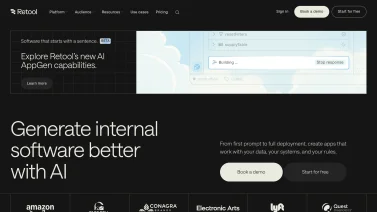
Specialized platforms for business tools. Retool specializes in internal tools. Appsmith enables rapid admin development. DronaHQ provides enterprise capabilities. These platforms excel at business tools.
Workflow and Automation Platforms
Specialized platforms for workflow automation. Zapier provides workflow automation. Make enables complex integrations. Kissflow handles process automation. These platforms automate business processes.
Mobile Application Builders
Specialized platforms for mobile development. Glide creates mobile apps from spreadsheets. Thunkable enables block-based development. Flutter Flow provides professional mobile development. These platforms focus on mobile delivery.
Current Trends in No-Code and Low-Code
Across the development landscape, no-code and low-code platforms are converging with emerging technologies to reshape how applications are built. Today, rapid visual design tools are complemented by intelligent assistance, robust backend services, and enterprise-grade governance, creating a versatile ecosystem that supports both citizen developers and professional teams.
AI-Powered Development Acceleration
Artificial intelligence increasingly automates development. AI generates code from descriptions. AI suggests optimal implementations. AI optimizes performance. These AI capabilities further accelerate development.
Backend as a Service Maturation
Backend services become increasingly sophisticated. Database services provide enterprise capabilities. API management enables integration. Authentication services enhance security. These services eliminate backend complexity.
Enterprise Adoption Acceleration
Enterprise organizations increasingly adopt no-code. Security and compliance improve. Multi-tenancy support enables scaling. Integration with enterprise systems improves. Enterprise adoption continues accelerating.
Customization and Code Export
Platforms increasingly enable code export. Generated code enables customization. Developer handoff becomes easier. Vendor lock-in reduces. Code export adoption increases.
Selecting Appropriate No-Code Solutions
Choosing the right no-code platform requires a clear understanding of the application's functional needs anticipated growth and the degree of customization permissible while also evaluating how the solution aligns with long-term strategic goals and integration capabilities. Such an assessment helps organizations avoid mismatched tools, reduce technical debt, and ensure that the chosen solution can evolve alongside business demands.
Assessing Application Requirements
Platform selection requires understanding needs. Evaluate application complexity and requirements. Determine necessary integrations. Assess deployment requirements. Different needs benefit from different platforms.
Considering Scalability and Performance
Evaluate platform scalability capabilities. User growth must be supported. Data volume requirements must be met. Performance must meet requirements. Growth planning informs platform selection.
Assessing Vendor Lock-In and Flexibility
Consider code export and portability. API access enables customization. Data export enables migration. Open standards reduce lock-in. These considerations ensure flexibility.
The Future of No-Code and Low-Code
No-code and low-code platforms will continue evolving toward greater intelligence, customization, and capability. Artificial intelligence will increasingly automate development decisions. Code export will enable greater customization. Enterprise capabilities will expand. Organizations prioritizing no-code innovation position themselves for sustained competitive advantage.
Modern no-code and low-code platforms represent transformative development infrastructure that directly impacts development velocity, innovation capacity, and competitive positioning. By enabling rapid application building, accelerating development timelines, reducing expertise requirements, and improving time-to-market, no-code platforms enable organizations to innovate faster and maintain competitive advantage. Organizations implementing sophisticated no-code strategies gain significant competitive advantages through accelerated development, reduced costs, improved innovation velocity, and enhanced organizational agility.
Frequently Asked Questions
No-code and low-code platforms let users create applications through visual interfaces, drag-and-drop components and simple configuration instead of writing extensive code. They speed up development, reduce reliance on specialized programmers and make it easier to prototype or automate processes. These tools often include pre-built connectors to common data sources, workflow engines and testing utilities, allowing business users to build and modify solutions with minimal technical training while still supporting integration with existing systems.
Focus on the range of visual building tools, the ease of integrating with existing data sources, and the flexibility of workflow automation. Look for support for custom logic without code, the ability to export or extend applications with code when needed, and robust security and compliance features. Also consider the scalability of apps, the availability of pre-built templates, and the quality of community or vendor support.
No-code and low-code platforms are designed to sit alongside existing applications, data stores, and workflows. They connect through standard APIs, webhooks, or built-in connectors, allowing data to flow between CRM, ERP, and other tools without custom code. Users can create forms, automations, or dashboards that read and write to the same databases used by legacy systems. This approach reduces integration effort, keeps data consistent, and lets business teams extend functionality without disrupting core infrastructure.
Teams often underestimate governance, allowing uncontrolled app sprawl that creates security gaps and maintenance headaches. To avoid this, establish clear approval workflows, set naming conventions, and assign ownership for each solution. Provide training that balances empowerment with best-practice guidelines, and schedule regular reviews to retire obsolete builds. Early alignment with IT and business stakeholders keeps the environment scalable and compliant.